BERNARD Emile

BERNARD Emile
Émile BERNARD (1868–1941)
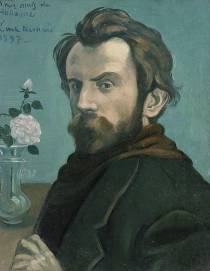
Émile Bernard, born in Lille in 1868 and died in Paris in 1941, was a French painter associated with Post-Impressionism and the Pont-Aven School. A close associate of Vincent van Gogh, Paul Gauguin and Louis Anquetin, he played an important role in the artistic developments of the late 19th century.
Between 1887 and 1892, his work contributed to the development of Cloisonnism and Synthetism, characterized by simplified forms and flat areas of colour enclosed by distinct outlines. His approach helped renew modern painting and contributed to the development of Symbolism.
Based in Egypt from 1893 to 1904, Émile Bernard painted scenes of everyday Egyptian life. After returning to France, he gradually turned towards a more classical style of painting, drawing inspiration from the study of the Old Masters and his exchanges with Paul Cézanne. His work thus spans several periods, from the avant-garde experiments of his youth to figurative compositions inspired by classical art.
Also active as an engraver and writer, Émile Bernard remains an important figure in the history of French painting from the late 19th and early 20th centuries.